For this week’s post I read:
Picturebooks:
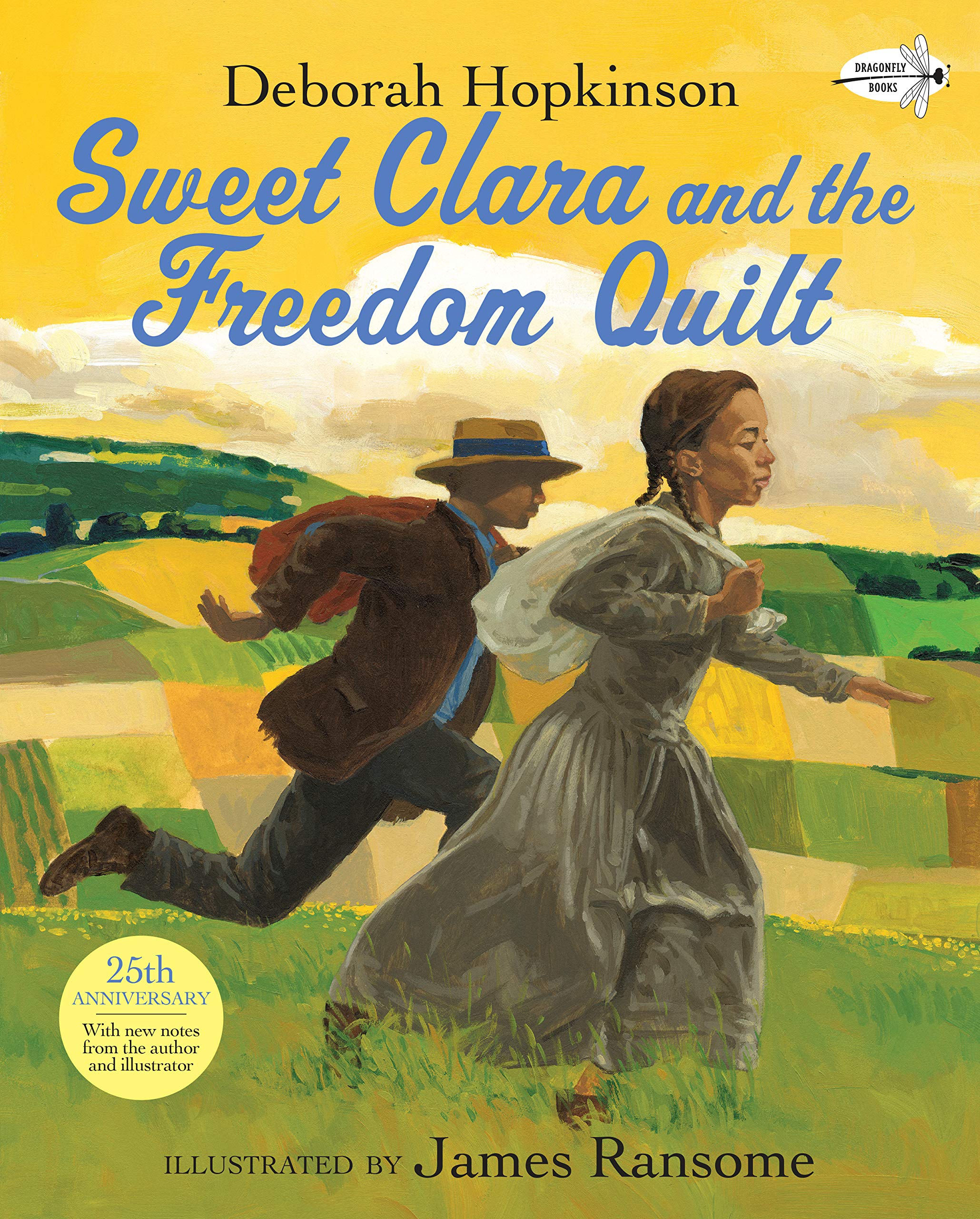
Sweet Clara and the Freedom Quilt by Deborah Hopkinson, published in 1993
How I Learned Geography by Uri Shulevitz, published in 2008

Chapter Book outside the US:
Africa is my Home: A Child of the Amistad by Monica Edinger, published in 2015

Chapter Book inside US:
Johnny Tremain by Esther Forbes, published in 1943

For this week’s blog post I decided to review “Sweet Clara and the Freedom Quilt” by Deborah Hopkinson. I have read this book before and I think it is a great book to use in classrooms to teach about our history. Clara was a young girl who got ripped away from her mother when she was only twelve years old to work on a plantation. She learned how to sew very well from her Aunt Rachel. She began to listen to stories about people escaping and from other workers- what the world looked like beyond the plantation. She decided to sew a map quilt of the road beyond the plantation- the road to freedom. At the end of the story, it is explained that many people used her quilt to escape to freedom.
To review this book, the ECL book uses the guiding questions of authenticity, traditions, dialogue, and perspectives throughout the story. This story has an authentic setting and can teach children about slavery in America. The dialogue is authentic to the time period and also easy to read for students. The perspective of the story is through the eyes of Clara and how she holds onto hope throughout the story. I think this is a good book to use to teach students about history, perseverance, and hope.
To evoke reader’s response, I would ask students about a time they needed to hold onto hope. This story is a heavy topic for students, so focusing on the facts and history is important, while also trying to help students somehow make a connection to the story. Clara held onto hope throughout the story and this helped her persevere and create her quilt which lead many people to freedom. I would use this in my classroom by teaching about the history of slavery in a grade-appropriate manner and about maps. I would create an activity that integrates art and social studies together. I would have students create a quilt map from their house to school, or from somewhere familiar to them (could even be from the playground to the classroom). I would have them explain how maps are useful for everybody.

 Alyssa's Literature Site